
Does TMS Therapy Work for Depression? Effectiveness, Benefits and Expectations
If you or someone you care about has been living with depression that hasn't improved despite trying several medications and talk therapy, you've probably wondered whether transcranial magnetic stimulation actually delivers results. The short answer is yes, for many people it does. This article breaks down the research, explains what to expect during treatment, and helps you figure out whether TMS therapy might be a realistic next step.
Key Takeaways
- Repetitive transcranial magnetic stimulation (rTMS) is FDA approved for major depressive disorder, with about 50–70% of patients experiencing meaningful improvement and roughly 30–50% reaching remission in large studies conducted since 2008.
- TMS therapy is most effective for treatment resistant depression after 2–4 antidepressant medication trials have failed, and it is also FDA-cleared for obsessive compulsive disorder, smoking cessation, and other indications.
- TMS is a noninvasive procedure performed as an outpatient visit without anesthesia or sedation, meaning patients can drive home and return to normal activities immediately after each TMS session.
- About 60% of patients with treatment resistant depression respond to TMS, and over 30% achieve remission after completing a full treatment course.
- Poplar Tree Wellness Center in Newton and Hackettstown, NJ offers TMS treatments as part of a broader mental health program and invites readers to schedule a consultation.
What Is TMS Therapy, and What Does It Treat?
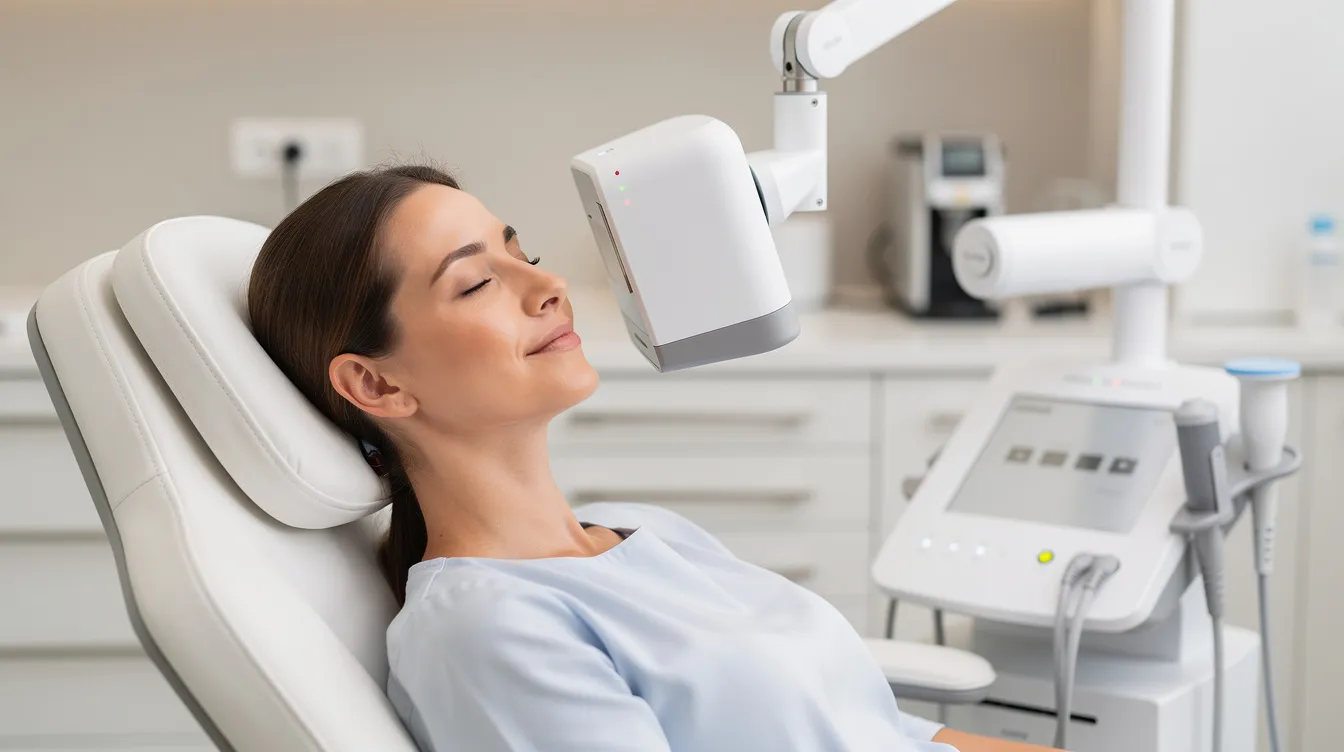
Transcranial magnetic stimulation (TMS) is a noninvasive treatment that uses magnetic fields to influence brain activity. During a session, a TMS device containing an electromagnetic coil is placed against the scalp. The coil delivers repeated magnetic pulses, sometimes called repetitive TMS or rTMS, that pass through the skull and stimulate nerve cells in specific brain regions linked to mood and mental health.
Unlike medications that travel through your entire body, magnetic stimulation targets a specific brain region without surgery, anesthesia, or systemic side effects. TMS uses magnetic pulses to stimulate nerve cells directly in the areas of the brain involved in mood regulation.
TMS is FDA approved for treating major depressive disorder since 2008, particularly in adults with treatment resistant depression. In 2018, FDA clearance expanded to include obsessive compulsive disorder (OCD). Additional cleared uses now include smoking cessation (2020), anxious depression, and adjunctive depression treatment in adolescents aged 15–21 (2024).
To clarify terminology: major depressive disorder (MDD) is a clinical diagnosis involving persistent depressive symptoms such as low mood, loss of interest, fatigue, and difficulty concentrating. When people say "major depression" or simply "depression," they are often referring to this same condition, though the formal diagnostic term is MDD.
At Poplar Tree Wellness Center, TMS therapy is offered within a full mental health treatment plan that may also include psychotherapy, medication management, and other interventional options when appropriate.
Does TMS Therapy Really Work for Major Depressive Disorder?
Yes, TMS therapy works for many people with major depressive disorder, and the evidence has grown substantially over the past 17 years. About 50% of patients respond to TMS for depression, and in well-selected populations with treatment resistant depression, response rates climb to roughly 60%. Roughly 30% to 40% of patients achieve complete remission, with complete or near-complete remission rates estimated between 25% and 35% across studies.
So what do those terms actually mean?
- Response means a significant reduction, typically 50% or greater, in depression symptoms as measured by standardized scales.
- Remission means depressive symptoms drop to a level considered near-normal or symptom-free.
A recent meta-analysis of 30 comparisons found that active rTMS made response nearly 4.8 times more likely and remission about 3.6 times more likely compared to sham treatment. Newer TMS protocols, like accelerated therapies involving theta burst stimulation, can yield higher short-term remission rates. In one triple-blinded trial, accelerated TMS produced a mean 54.7% symptom reduction versus 31.9% for sham.
Success rates can vary based on severity of depression and previous medication failures. Patients often experience meaningful improvement after multiple failed antidepressant trials, which is notable because each additional medication trial typically offers diminishing returns. The evidence base for TMS treatment is now comparable to, and in some cases stronger than, many antidepressant medication trials in similar patient groups.
Poplar Tree Wellness Center can discuss the latest protocol options, including accelerated TMS where appropriate, during a consultation for TMS therapy.
How Does Transcranial Magnetic Stimulation Work in the Brain?
Understanding the mechanism behind TMS helps set realistic expectations about how and when improvement happens. The process is straightforward, even if the neuroscience underneath is complex.
- A TMS machine uses an electromagnetic coil, sometimes called a magnetic coil, placed against the scalp. When activated, it generates brief magnetic fields that pass painlessly through the skull.
- These magnetic fields create tiny electrical currents in the underlying brain tissue, enough to activate or modulate nerve cells without surgery or sedation.
- For depression treatment, the TMS coil targets the left dorsolateral prefrontal cortex (DLPFC), a region of the prefrontal cortex heavily involved in mood regulation, decision-making, and emotional control. This area is often underactive in people with major depression.
- Repetitive transcranial magnetic stimulation, called repetitive TMS, gradually increases activity in these underactive mood circuits and helps rebalance connections between the DLPFC and deeper limbic structures like the amygdala and anterior cingulate cortex.
- Over multiple TMS sessions, brain stimulation is thought to promote neuroplasticity, meaning the brain builds and strengthens connections between neurons. This is why effects tend to build gradually over weeks rather than appearing overnight.
Although the precise biology is still being refined, decades of research consistently show measurable changes in brain activity that align with clinical improvements in depressive symptoms.
Who Is a Good Candidate for TMS Treatment?
TMS is not a first-line treatment. It is typically recommended when standard approaches have not provided adequate symptom relief for major depressive disorder. Candidates must have tried multiple antidepressants without success, usually 2–4 medication trials at adequate doses and durations, along with psychotherapy.
Typical eligibility criteria include:
- Adults diagnosed with major depression or treatment resistant depression with ongoing symptoms despite adequate trials of antidepressant medications and therapy
- Adolescents aged 15–21 (under certain FDA-cleared protocols)
- People who cannot tolerate antidepressant side effects such as weight gain, sexual dysfunction, or sedation
- Individuals who prefer to minimize reliance on systemic medications
TMS is suitable for adults with treatment resistant depression, and certain anxiety symptoms, PTSD features, or co-occurring mental health conditions may also improve when TMS is used to treat depression. Response rates for anxiety treated alongside depression range from 45% to 70%. However, depression remains the primary FDA-approved target.
At Poplar Tree Wellness Center, a TMS-trained psychiatrist reviews each person's medical and mental health history to determine whether TMS therapy, medications, psychotherapy, or other treatments like Spravato (esketamine) or ketamine therapy fit best.
Who Should Not Receive TMS Therapy?
TMS is generally safe, but because it uses strong magnetic fields, it is not appropriate for everyone.
Main contraindications include:
- Non-removable ferromagnetic metal in or near the head, such as aneurysm clips, certain cochlear implants, deep brain stimulators, or metal fragments. TMS is not safe for patients with non-removable metal implants.
- Certain implanted medical devices not rated as safe for magnetic resonance imaging (MRI-safe)
- Active seizure disorder or significant neurologic illness. Patients with a history of seizures may not qualify for TMS. TMS is contraindicated for individuals with certain neurological disorders.
Standard dental fillings and braces are usually safe and do not prevent TMS treatments.
If someone is experiencing active suicidal crisis, psychotic depression, or needs rapid hospital-level stabilization, inpatient care or electroconvulsive therapy (ECT) is typically more appropriate than outpatient TMS sessions. People with traumatic brain injury involving metallic hardware also need careful evaluation.
Poplar Tree Wellness Center screens for all of these issues during the initial evaluation to ensure brain stimulation therapies are used safely and appropriately.
What Happens During a Typical TMS Session?
TMS sessions take place in a comfortable outpatient clinic setting at Newton or Hackettstown, NJ. No anesthesia, sedation, or hospitalization is needed. TMS does not require anesthesia or sedation during treatment.
Preparation: You remove any magnetic-sensitive objects, sit in a reclined chair, and put on earplugs to soften the clicking sound of the TMS device.
First appointment mapping: The first TMS appointment includes mapping the motor threshold. Your treatment team briefly stimulates the motor cortex and watches for a small finger or thumb twitch. This calibration determines the right intensity and precise coil placement for your brain.
During the session: You feel a tapping or pulsing sensation on the scalp as TMS pulses are delivered in short trains with brief rest periods between them. TMS sessions typically last 30 to 40 minutes each for traditional rTMS protocols, while newer intermittent theta burst stimulation sessions can be as short as 3 minutes. Overall, TMS sessions typically last between 3 to 40 minutes depending on the protocol.
You remain fully awake throughout. You can talk with the technician, listen to music, or rest. Patients can resume normal activities immediately after TMS sessions, including driving, work, and childcare.
TMS sessions are administered by trained technicians under the supervision of a TMS-certified psychiatrist, with regular mood check-ins throughout the course of treatment.

How Long Does TMS Take to Work, and How Many Sessions Are Needed?
TMS treatment is a series, not a one-time procedure. Benefits build gradually during the treatment course.
Typical schedule: Patients usually receive TMS five days a week for six weeks, totaling approximately 30–36 treatment sessions, plus possible taper or maintenance visits. TMS treatments typically last 30 minutes, five days a week. TMS can be performed five days a week for six weeks.
When improvements appear: Patients often notice improvements within weeks of starting TMS. Early changes in sleep, energy, or concentration may appear within 1–2 weeks, while a significant reduction in depressive symptoms often becomes noticeable by weeks 3–5. TMS can provide symptom relief within a few weeks. Patients who complete the full course of TMS are more likely to respond positively.
Durability: Research shows that among patients who respond, about 66.5% maintain sustained improvement at 3 months, roughly 52.9% at 6 months, and about 46.3% at 12 months. More than half of responders maintain meaningful benefit for at least six months, especially when they continue psychotherapy and medication management.
Accelerated TMS options: Accelerated TMS and theta burst stimulation protocols compress the treatment into a shorter period by delivering multiple daily sessions. These approaches have shown promising results in clinical trials and can be discussed with your treatment team if appropriate.
At Poplar Tree Wellness Center, TMS scheduling is individualized to fit each person's life, work, school, and transportation needs.
What Are the Benefits and Side Effects of TMS Therapy?
TMS treatments offer clear advantages over other depression treatments for some people, though they still carry potential side effects worth understanding.
Benefits
- Noninvasive procedure with no anesthesia or recovery period
- Patients can drive immediately after each treatment session
- Minimal systemic side effects compared to antidepressant medications
- Compatible with ongoing medications and talk therapy
- Strong evidence for alleviate depression symptoms in major depression
- TMS can reduce suicidal ideation rapidly in high-risk patients
- TMS has fewer side effects than traditional antidepressants
Common Side Effects
- About 50% of patients report headaches after TMS sessions, usually mild and temporary
- TMS can cause discomfort at the stimulation site in about one-third of patients, typically described as scalp discomfort
- Temporary twitching of facial muscles during treatment
- Tinnitus may occur after TMS due to loud clicking sounds (earplugs are always provided)
Rare Risks
The main serious risk is seizure, but the risk of seizures during TMS is less than 0.1%. When safety guidelines for motor threshold calibration and pulse parameters are followed, this risk drops even further. Pre-treatment screening greatly reduces this risk.
Side effects often decrease after the first several TMS sessions as the body adjusts. The treatment team can also adjust magnetic energy intensity or schedule to improve comfort. Compared with antidepressant medications, TMS does not typically cause weight gain, sexual side effects, gastrointestinal discomfort, or sedation.
How Does TMS Compare to Antidepressant Medication and ECT?
TMS is one tool in a broader depression treatment toolkit that includes medication, psychotherapy, and in some cases electroconvulsive therapy or newer options like Spravato.
| Feature | TMS | Antidepressant Medications | ECT |
|---|---|---|---|
| Invasiveness | Noninvasive | Systemic (oral) | Requires anesthesia |
| Common side effects | Scalp discomfort, headache | Weight gain, sexual dysfunction, sedation | Memory issues, confusion |
| Anesthesia required | No | No | Yes |
| Best for | Treatment resistant depression | First-line depression | Severe/psychotic depression |
| Typical remission rate (TRD) | 30–50% | Diminishing with each trial | Higher, but with trade-offs |
A 2026 comparative study found that rTMS treatment produced response rates of 40.9% versus 18.8% for additional medication, and remission of 29.5% versus 6.3%, with stable effects over 12-month follow-up in patients with moderate treatment resistant depression.
ECT remains the treatment modality of choice for very severe or psychotic depression and acute suicidal risk but requires brief seizures, recovery time, and may cause temporary memory issues. TMS is non-convulsive and does not require hospitalization.
Many patients use a combination approach, continuing medications and psychotherapy while adding TMS sessions to maximize chances of recovery. Mental illness often benefits from multiple treatment angles working together.
What to Expect From TMS Therapy at Poplar Tree Wellness Center
Poplar Tree Wellness Center is an outpatient mental health clinic in Newton and Hackettstown, NJ offering psychiatry, psychotherapy, and interventional treatments including TMS therapy.
The typical TMS care pathway:
- Initial consultation and diagnostic assessment
- Review of previous depression treatment history and medication trials
- Insurance and coverage verification (the team helps with prior authorization)
- Discussion of whether TMS, deep TMS, or other options are appropriate
- Individualized rTMS treatment plan, including protocol selection, number of sessions, and coordination with ongoing psychotherapy and psychiatric medication management
Regular check-ins with a TMS-trained psychiatrist track improvement using standardized rating scales, and communication with your therapist or primary care provider (with consent) keeps your entire care team aligned.
Poplar Tree accepts many major insurance plans, including Medicare and Medicaid, and staff can help verify TMS coverage and navigate any prior authorization requirements. For readers exploring comprehensive mental health services, the clinic integrates TMS within a holistic approach to support patients across certain mental health conditions.

Frequently Asked Questions About TMS Therapy
These FAQs address common practical concerns that may not have been fully covered above.
How long do the benefits of TMS usually last?
Results vary, but many people who respond to TMS maintain significant improvement for at least several months, and some for a year or longer, especially if they continue therapy and medications. Data shows roughly half of responders still experience sustained improvement at six months. If symptoms return, some patients benefit from a shorter series of booster TMS sessions. Poplar Tree providers discuss long-term plans before the initial treatment course ends.
Will I have to stop my current antidepressant or therapy to start TMS?
Most patients do not need to stop medications or psychotherapy when starting TMS. In fact, TMS is often added to existing depression treatment plans as a noninvasive procedure that complements other treatments. The prescribing psychiatrist may gradually adjust multiple antidepressant medications over time based on how you respond to TMS therapy and your overall mental health trajectory.
Can TMS help with anxiety or OCD symptoms?
While TMS is primarily used as a depression treatment, certain protocols are FDA-cleared for obsessive compulsive disorder, and many patients with co-occurring anxiety notice improvement in OCD symptoms and anxious feelings as depression lifts. The Clinical TMS Society supports careful protocol matching based on diagnosis. Poplar Tree's team carefully matches patients to the appropriate protocol, whether depression-focused or OCD-focused, based on diagnosis, symptoms, and insurance criteria.
Is TMS therapy painful or loud?
The sensations feel like a tapping or knocking on the scalp. Some people find it unusual at first but typically tolerate it well after the first few sessions. Earplugs are always provided to reduce the clicking sound from the TMS machine. The intensity of the magnetic stimulation can often be adjusted to balance comfort and effectiveness at the stimulation site.
How much time will I need to take off work or school?
Most TMS sessions last under 30 minutes for newer protocols, and with check-in and setup the total visit is often under an hour. Because there is no anesthesia or recovery period, patients can typically return to work, class, driving, and childcare immediately after each session. Many patients schedule visits before or after work or during a lunch break, and the TMS device requires no preparation that would disrupt your day.
Ready to Explore TMS? Take the Next Step With Poplar Tree Wellness Center
TMS therapy can be a powerful option when major depressive disorder has not responded to medications or standard therapy. As a treatment modality backed by nearly two decades of clinical research, it fits naturally within Poplar Tree's broader approach to improving symptoms across mood disorders and other mental health conditions.
Contact Poplar Tree Wellness Center in Newton or Hackettstown, NJ to schedule a consultation, verify insurance, and discuss whether TMS, Spravato, ketamine therapy, or another path might be right for you. Bring your questions, previous diagnoses, and medication histories so the team can provide individualized guidance rather than one-size-fits-all answers.
Recovery from depression is possible. The right combination of care and support can help you reclaim the quality of life you deserve.