
Advanced Treatments for Treatment Resistant Depression 2026: Rapid-Acting Options, Brain Stimulation, and Local Care
If you’ve struggled with depression that hasn’t responded to multiple medications, advanced treatments for treatment resistant depression in 2026 bring genuine reason for hope. Rapid-acting treatments like esketamine, advanced brain stimulation protocols such as SAINT therapy, and at-home neuromodulation devices are now available across the US—including options accessible near your community through coordinated care with Poplar Tree Wellness.
This article covers the full scope of advanced treatments for treatment resistant depression, including rapid-acting medications, innovative brain stimulation therapies, at-home neuromodulation devices, and integrated care approaches. It is intended for individuals living with treatment-resistant depression and their families, providing clear, up-to-date information on what options are available and how to access them. These advances matter in 2026 because recent FDA approvals and expanded local access mean that more people than ever can benefit from breakthrough therapies that offer new hope after traditional antidepressants have failed.
Key Takeaways
- Treatment resistant depression affects approximately one-third of the 332 million people worldwide living with major depressive disorder, meaning over 110 million individuals may need options beyond traditional antidepressants.
- Newer treatments including esketamine nasal spray and SAINT (Stanford Accelerated Intelligent Neuromodulation Therapy) can provide symptom relief within hours to days, with remission rates exceeding 50% in clinical trials—a dramatic improvement over the 2-6 week onset of conventional medications.
- The FDA has cleared multiple new depression treatments since 2019, including esketamine for treatment-resistant cases, zuranolone for postpartum depression, and accelerated transcranial magnetic stimulation protocols.
- Poplar Tree Wellness helps patients navigate these options locally, providing referrals to REMS-certified esketamine clinics, TMS centers, and SAINT programs while coordinating psychotherapy and aftercare close to home as part of its compassionate, innovative mental health care in Newton, NJ.
- These treatments work best within a comprehensive, personalized plan—none replaces talk therapy, lifestyle support, or emergency care when needed.
Understanding Major Depressive Disorder and Why New Treatments Matter
Prevalence and Impact
Major depressive disorder involves persistent low mood, loss of interest in activities, and functional impairment lasting at least two weeks. Treatment-resistant depression (TRD) is defined as an inadequate response to two different treatments. In the US, lifetime prevalence reaches approximately 20.6% among adults. treatment resistant depression trd is defined as an inadequate response to two different treatments, including failure to respond to at least two adequate antidepressant trials of six weeks each, and affects 15-33% of those cases.
Limitations of Traditional Antidepressants
antidepressant medication like SSRIs (selective serotonin reuptake inhibitors) and SNRIs (serotonin-norepinephrine reuptake inhibitors), among the most commonly prescribed antidepressants, has significant limitations that drive the need for innovation. These medications typically require 2-6 weeks before patients notice improvement, often only after an adequate dose, leave 30-40% of users with only partial responses, and carry side effects including sexual dysfunction (affecting up to 70%), weight gain, and emotional blunting. About 33% achieve remission after the first antidepressant trial, about 25% do so after switching or augmentation, and only 2.7% maintain stable remission after four medication attempts. Perhaps most concerning, they can paradoxically increase suicidality risk early in treatment for 5-10% of patients under 25.
Recent Advances in Depression Treatment
In recent years, the period from 2019 to 2026 has been remarkably active for antidepressant development. A recent systematic review published in an American Journal highlights recent findings supporting innovative therapies for depression. The FDA approved esketamine nasal spray in March 2019 for treatment resistant depression, zuranolone received approval in August 2023 specifically for postpartum depression, and SAINT cleared regulatory review in September 2022. Many of these advances have been supported by grants and research from the National Institute of Mental Health. Ketamine-based therapies are also entering clinical practice, not just research settings. These therapies address what conventional medications cannot: rapid relief for people in crisis.

Access to these treatments varies by region across the US. Over 1,100 TMS (transcranial magnetic stimulation) practices now operate nationwide, with concentrations in the Northeast corridor and West Coast urban centers. Midwest and Southern communities are seeing growth in esketamine clinics through REMS (Risk Evaluation and Mitigation Strategy) certification programs. Poplar Tree Wellness serves as a local navigator in this ecosystem, helping patients identify evidence-based options available in their specific region rather than functioning as a pharmacy or treatment center itself, while its compassionate, personalized mental health care in Newton, NJ emphasizes accessibility and strong therapeutic relationships.
| Treatment Type | Onset of Action | Mechanism | Setting |
|---|---|---|---|
| Traditional Antidepressants (SSRIs/SNRIs) | 2-6 weeks | Monoamine reuptake inhibition | Daily home pill |
| Esketamine | Hours to days | Glutamate/GABA modulation | Certified clinic |
| SAINT/Advanced TMS | Days to 1 week | Magnetic brain stimulation | Specialized clinic |
| At-Home Devices | Several weeks | Low-intensity electrical stimulation | Home use |
Esketamine and Ketamine: Rapid-Acting Treatments for Treatment Resistant Depression
How Esketamine Works
Ketamine (IV/IM) and esketamine (FDA-approved nasal spray since 2019) represent a fundamental shift in treating depression. Unlike medications that take weeks to work, these treatments can reduce depressive symptoms and suicidal ideation within hours—making them particularly valuable for patients with severe depression or acute crisis. Recently, a single-dose, preservative-free ketamine formulation has been developed and is progressing through regulatory approval for the rapid intervention of acute suicidal depression.
Esketamine (brand name Spravato) is a derivative of ketamine, approved specifically for treatment resistant depression when combined with an oral antidepressant. Esketamine must be used in conjunction with a conventional antidepressant to provide rapid relief from depression symptoms. It’s administered only in certified clinics under direct supervision due to potential side effects. A typical treatment course with Spravato esketamine nasal spray for treatment-resistant depression involves twice-weekly clinic visits for four weeks during induction, followed by weekly then monthly maintenance sessions. Each visit includes three doses given five minutes apart, followed by approximately two hours of observation for dissociation, dizziness, and blood pressure changes.
Esketamine works by increasing levels of glutamate, the most abundant chemical messenger in the brain. This mechanism is different from traditional antidepressants, which primarily target monoamine neurotransmitters. The increase in glutamate allows for a greater impact on more brain cells at one time, leading to rapid changes in brain connectivity and mood regulation.
Esketamine Treatment Protocol
- Administration: Esketamine is administered as a nasal spray for those with treatment-resistant depression.
- Setting: Only in REMS-certified clinics, under direct supervision.
- Course: Twice-weekly visits for four weeks (induction), then weekly or monthly maintenance.
- Dosing: Three doses per visit, five minutes apart.
- Observation: Two hours of monitoring for side effects such as dissociation and blood pressure changes.
Clinical trials demonstrate meaningful results. In the TRANSFORM-2 trial, outcomes were compared between a treatment group receiving esketamine and a placebo group, with 50% of patients in the treatment group responding by day 28 compared to 31% receiving placebo. Real-world registries report 60-80% improvement in suicidal ideation within hours. The SUSTAIN-2 trial also used a treatment group and placebo group design, showing sustained response in 52% of patients at six months.
Side effects are mostly transient: dissociation occurs in 40-60% of doses but typically resolves within 1-2 hours. Nausea affects 15-20% of patients, and blood pressure elevations of up to 20mmHg systolic are common. Serious adverse events are rare (less than 0.1%), and the strict REMS program requires on-site staff monitoring throughout each session.
A Patient’s Journey: Consider someone who failed two SSRIs and an SNRI over eighteen months. Through Poplar Tree Wellness, they received documentation support for insurance approval and a referral to a regional Spravato esketamine treatment clinic in Newton, NJ, drawing on the center’s expertise with Spravato esketamine treatment for treatment-resistant depression in Newton, NJ. After two weeks of esketamine treatment with coordinated psychotherapy, they experienced a 50% reduction in depression symptoms—the first meaningful relief in years.
Who Is a Good Candidate for Esketamine/Ketamine?
The ideal candidate is an adult 18 or older with treatment resistant depression who has not responded adequately to at least two prior medication trials, usually given at an adequate dose and duration, with moderate-to-severe impairment and no contraindications like uncontrolled hypertension or active psychosis.
Likely candidates include:
- Those with acute suicidality
- Individuals with anhedonia-dominant depression
- Patients with significant functional impairment where response rates can reach 70%
Maybe candidates include:
- Individuals with substance use history in remission for at least six months
- Pregnant individuals (on a case-by-case basis)
- Adolescents (where off-label use is being studied)
- Patients with co-occurring post traumatic stress disorder who may need individualized evaluation, especially if ketamine-based care is being considered
Not good candidates include:
- Those with active psychosis
- Recent heart attack
- Glaucoma
- Uncontrolled high blood pressure
Most insurers in 2026 require documentation of prior medication trials and sometimes psychological assessment before approving coverage. Poplar Tree Wellness, which works closely with psychiatrists who accept Medicaid and other insurance in New Jersey and offers psychiatrists who accept Medicaid in NJ through its broader network, assists patients in assembling this documentation, conducting risk-benefit reviews, and connecting with local specialists who can provide appropriate evaluation. Its doctors also review comorbidities and other risk factors, such as chronic pain or anxious depression, when choosing advanced treatment options.
SAINT and Advanced TMS: Precision Brain Stimulation
SAINT Protocol Details
Transcranial magnetic stimulation (TMS) uses magnetic pulses to stimulate specific brain regions involved in mood regulation. FDA-cleared since 2008, NeuroStar Advanced TMS therapy for depression commonly requires 36 sessions over 6-9 weeks, yielding 50-60% response and 30-40% remission rates according to the NeuroStar Registry of over 17,700 patients; advanced TMS can cut depression symptoms in half for about 58% of patients, supporting the goal of achieving remission, especially with TMS for depression in Newton, NJ at Poplar Tree Wellness Center.
SAINT, or Stanford Accelerated Intelligent Neuromodulation Therapy, is a noninvasive treatment for treatment-resistant depression that uses magnetic pulses to stimulate the prefrontal cortex. SAINT therapy involves ten 10-minute sessions per day for five consecutive days, which is significantly faster than traditional TMS treatments that can take weeks. Accelerated TMS protocols can deliver 90,000 pulses in 5 days, compared with traditional TMS spread over several weeks.
The pivotal Cole et al. 2022 randomized controlled trial (though small with 29 participants) achieved 79% remission versus 13% in the control group within one week. Published SAINT remission rate findings for treatment-resistant depression have been reported in the 75-90% range, with some studies describing full remission outcomes. A larger 2026 RCT reported approximately 70% response and 50% remission in broader treatment resistant populations.
Access to Advanced Brain Stimulation
Patients describe the experience as feeling scalp tapping or brief “snaps.” Headache affects about 40% but is transient. No anesthesia is required, and participants can return to normal activities immediately. Durability varies—50-70% remain relapse-free at 6-12 months, though many need booster sessions alongside ongoing therapy and medication.
Access remains challenging. Only a small number of specialized clinics currently offer this advanced therapy—approximately 100 SAINT sites exist nationwide, often at academic centers like Stanford, UCLA, and medical schools in major cities including San Francisco. Costs range from $16,000-$30,000 per course, with insurance coverage expanding but still inconsistent. Deep brain stimulation is a much more invasive surgical option and remains experimental, with clinical trials focused on the most severe cases. Standard TMS, including NeuroStar TMS therapy for depression in Sussex County, NJ and NeuroSTAR TMS therapy for depression in Sussex County, NJ, remains more widely available at over 1,100 sites for patients who cannot access SAINT.
Poplar Tree Wellness evaluates whether advanced TMS or SAINT is appropriate based on symptom profiles and practical factors, then coordinates referrals to regional neuromodulation centers, where individualized targeting and protocol selection are handled by doctors, while providing pre- and post-treatment counseling locally.
At-Home Wearable Brain Stimulation and Other Neuromodulation Devices
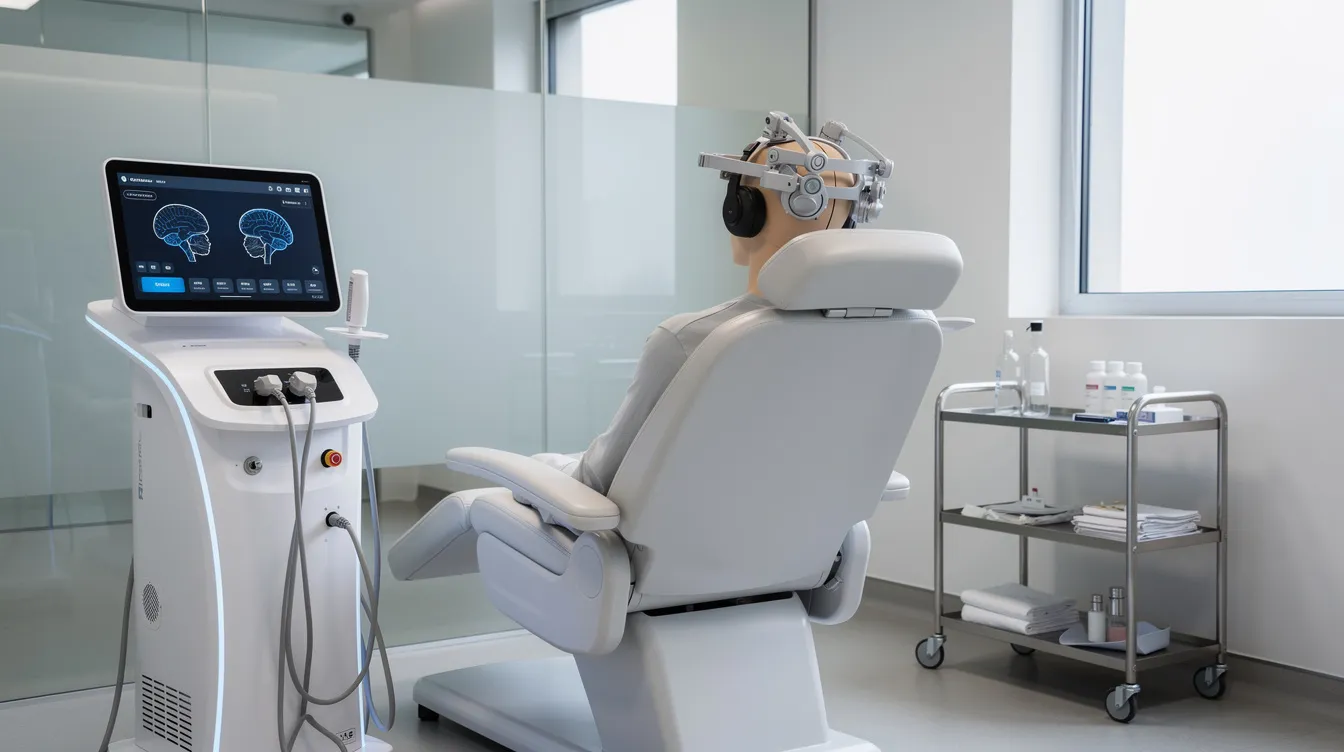
In December 2025, the FDA authorized the first prescription at-home neuromodulation headset for moderate to severe major depression in healthy adults. These devices deliver low-intensity transcranial direct current stimulation through scalp electrodes, modulating brain cells in networks involved in mood regulation.
Sessions typically last 30 minutes daily, five times weekly for 6-12 weeks. The devices must be prescribed and monitored by a clinician and are usually combined with antidepressants or psychotherapy. Approved for major depressive disorder (not treatment resistant depression, bipolar depression, or obsessive compulsive disorder), they represent an option for patients with mild-to-moderate symptoms or those seeking adjunct treatment.
A typical home session:
- Complete an evening safety check (confirming no metal implants, reviewing symptom logs).
- Place the electrode cap following app-guided instructions.
- Complete a 30-minute session while reading or relaxing.
- Log symptoms for remote monitoring.
Poplar Tree Wellness assesses eligibility, coordinates prescriptions where appropriate, and tracks progress remotely as part of comprehensive mental health and wellness services and comprehensive mental health services at Poplar Tree Wellness Center in integrated care plans offered through its psychiatry and therapy services in Newton, NJ.
New Medications Beyond SSRIs: Zuranolone and Other Emerging Therapies
Research into mood disorders has expanded beyond traditional targets, supported by increasingly sophisticated medical lab services and health testing in Newton, NJ and the comprehensive mental health treatment in Newton, NJ at Poplar Tree Wellness Center. Many medications under development from 2019-2026 focus on GABA-A receptors (a type of neurotransmitter receptor involved in calming brain activity), glutamate pathways, or inflammation-related mechanisms—offering hope for patients who haven’t responded to conventional antidepressant therapy.
Zuranolone (Zurzuvae) stands out as the first oral neuroactive steroid to receive FDA approval, cleared in 2023 specifically for postpartum depression. Clinical trials showed participants taking 50mg daily for 14 days experienced MADRS reductions of 15-17 points by day 15 versus 11 points for placebo, with improvement beginning by day 3. Notably, the Food and Drug Administration did not approve it for general major depression despite mixed data.
By 2026, zuranolone is primarily available through specialized women’s mental health and reproductive psychiatry programs. Coverage varies significantly by state and health system. The treatment represents precision medicine for a specific condition during a vulnerable window rather than a daily, indefinite antidepressant.
Pipeline medications to watch include NRX-100 (preservative-free IV ketamine with anticipated decisions around mid-2026), seltorexant (an orexin-2 antagonist for depression with insomnia), and psychedelic-assisted therapies. COMP360 psilocybin showed Phase 3 success in June 2025 for treatment resistant cases, though these remain experimental and not yet routine clinical use.
| Medication | Onset | Duration | Primary Use |
|---|---|---|---|
| SSRIs | 2-6 weeks | Ongoing daily | General MDD |
| Zuranolone | Days | 14-day course | Postpartum depression |
| Ketamine/Esketamine | Hours | Multiple sessions | Treatment resistant depression |
Poplar Tree Wellness screens patients for eligibility, connects them with regional perinatal psychiatry clinics when appropriate, and ensures therapy follow-up close to home through its comprehensive mental health treatment services in Newton, NJ.
Integrated and Combination Approaches at Poplar Tree Wellness
Research published in behavioral sciences journals consistently shows combined approaches—medication plus psychotherapy plus lifestyle interventions—outperform any single treatment alone by 20-30% in remission rates, particularly for chronic or treatment resistant cases.
Poplar Tree Wellness structures care through comprehensive intake evaluation using standardized tools like PHQ-9 (Patient Health Questionnaire-9, a depression screening tool) and GAD-7 (Generalized Anxiety Disorder-7, an anxiety screening tool) scores, collaborative treatment planning, and step-wise integration of advanced treatments when needed, reflecting its broader philosophy of holistic journeys to wellness for chronic health challenges and your journey to wellness through holistic, integrated care. This approach ensures patients aren’t simply handed a referral but receive ongoing support throughout their treatment journey.
Common components of integrated care include:
- Evidence-based psychotherapy (CBT, ACT, trauma-focused approaches) within comprehensive mental health services at Poplar Tree Wellness
- Coordinated medication management with prescribers
- Neuromodulation referrals when appropriate
- Lifestyle supports addressing sleep, clean, nutrient-dense nutrition, movement, and social connection
- Local resources—community support groups, primary-care collaborations, regional hospitals, and natural remedies for stress and anxiety—incorporated based on each patient’s location
Case vignette: A patient begins with weekly therapy sessions and an SSRI. After three months of partial response, their treatment plan escalates to include TMS at a partner clinic 30 miles away while continuing weekly sessions at Poplar Tree Wellness. After the TMS course, ongoing therapy helps process emotional changes and maintain gains. Twelve months later, they’ve achieved stable remission—a journey made possible by coordinated, integrated care rather than fragmented treatment.
Access, Insurance, and Safety Considerations
Access to new mental health treatment remains uneven, particularly for individuals managing complex conditions like chronic fatigue syndrome with holistic care. SAINT is available at approximately 100 specialized centers, while standard TMS reaches over 1,100 locations. Esketamine requires REMS-certified clinics, and zuranolone access depends heavily on regional women’s health programs. Out-of-pocket costs can reach $5,000-$30,000 for advanced treatments, which is why many people explore TMS therapy and holistic wellness options at Poplar Tree Wellness as part of a broader care strategy.
Insurance requirements in 2026 typically demand documented treatment resistance, severity thresholds, and prior authorization. Approximately 80% of insurers approve esketamine when proper documentation of failed medication trials is submitted. Working closely with clinicians to navigate these steps can mean the difference between coverage and denial.
Safety planning is essential. None of these treatments replaces emergency support. Patients with active suicidal plans should seek immediate help through local emergency rooms, 9-1-1, or the 988 Suicide and Crisis Lifeline rather than waiting for specialty appointments. Poplar Tree Wellness helps build crisis plans that include local hotlines, urgent-care options, and clear protocols for psychiatric disorders emergencies, while also offering adjunctive wellness options such as micronutrient IV therapy for energy and weight management within its broader comprehensive mental health services at Poplar Tree Wellness Center.
Practical support includes:
- Helping compile medical histories for insurance review and offering resources for overcoming apprehensions about starting mental health treatment
- Providing guidance on which local centers accept specific plans
- Creating step-by-step pathways from initial phone call to first advanced-treatment appointment—a process that typically takes several weeks of coordination
Future Directions in Depression Treatment
The future of depression treatment is brighter than ever, with depression remaining a leading cause of disability worldwide, thanks to rapid advances in neuroscience, precision medicine, and innovative therapies. As researchers and clinicians deepen their understanding of major depressive disorder and treatment resistant depression, the focus is shifting toward highly personalized, non-invasive, and effective options that can deliver rapid relief and long-term remission for even the most severe depression symptoms.
One of the most exciting frontiers is the continued evolution of brain stimulation therapies. Transcranial magnetic stimulation (TMS) has already transformed the landscape for patients who have not responded to traditional antidepressant therapy. Now, next-generation protocols like Stanford Accelerated Intelligent Neuromodulation Therapy (SAINT) are pushing the boundaries even further. SAINT therapy uses advanced brain imaging to precisely target the brain cells and neural circuits most involved in mood regulation, allowing for intelligent neuromodulation therapy that is tailored to each individual’s unique brain connectivity. Clinical trials have shown that SAINT can achieve rapid remission in a significant proportion of patients with treatment resistant depression—often within days, rather than the several weeks required for traditional TMS or antidepressants.
The promise of precision medicine is also being realized in the development of new medications. Zuranolone, for example, represents a new class of neuroactive steroids that target GABA-A receptors, offering rapid relief for postpartum depression with a short, two-week course and fewer negative side effects than many older medications. Ongoing research is exploring whether similar compounds could benefit other forms of major depression or mood disorders, expanding the toolkit for clinicians and patients alike.
As the field advances, there is growing recognition that depression rarely exists in isolation and may be influenced by underlying factors identified through micronutrient testing for optimal health. Biological systems outside the brain can contribute to persistent symptoms. Emerging findings suggest gut and inflammatory pathways may affect depression in both directions. Many individuals experience co-occurring conditions such as anxiety or obsessive compulsive disorder, which can complicate diagnosis and treatment. Future approaches are increasingly focused on combination therapies—integrating talk therapy, medication, brain stimulation, and supportive modalities like light therapy within holistic healing—to address the full spectrum of psychiatric disorders and provide more comprehensive mental health treatment. This holistic approach is supported by behavioral sciences research, which consistently shows that integrated care leads to higher remission rates and better quality of life.
Non-invasive brain stimulation is also being studied for its potential to treat other psychiatric disorders, including bipolar disorder and schizophrenia, alongside integrative supports such as holistic therapy for cancer patients. Early results suggest that these techniques may offer rapid relief and improved outcomes for a range of conditions, with fewer side effects than high doses of traditional medications or electroconvulsive therapy.
Moving Forward: Choosing the Right New Treatment for You
As of late March 2026, patients experiencing depression have more evidence-based choices than ever before. Rapid-acting medications, advanced non invasive brain stimulation, home devices, and comprehensive integrated care offer paths forward even when traditional antidepressants have failed.
Consider your personal factors: severity and duration of symptoms, previous antidepressant medication history, whether prior trials reached an adequate dose, whether the first antidepressant or later changes produced any remission, past therapy history, co occurring conditions, pregnancy status, insurance coverage, distance to specialty centers, and comfort level with different treatment approaches. These variables matter as much as any diagnosis when determining the right path.
Decisions should be made collaboratively with a licensed mental health or medical professional—not based solely on online research. Poplar Tree Wellness offers local consultations to help match patients to suitable evidence-based options, whether that means optimizing current treatment, integrating supportive services like IV therapy from providers in New Jersey, or exploring newer interventions such as TMS and NeuroStar-based neuromodulation at Poplar Tree Wellness Center and Spravato esketamine treatment in Newton, NJ.
The goal is achieving remission—and ideally full remission—through the right individualized plan, even after years or decades of suffering. Patients who believed they’d tried everything are finding hope through treatments that didn’t exist five years ago. If you’re ready to explore these options, reaching out for a comprehensive assessment is the first step toward meaningful change.

Frequently Asked Questions About New Treatment for Depression in 2026
How quickly can these new treatments start to work compared with traditional antidepressants?
Traditional SSRIs and SNRIs typically require 2-6 weeks—sometimes longer—before noticeable improvement occurs. Ketamine and esketamine can reduce depressive symptoms within hours to days in many patients, while SAINT therapy may bring rapid remission within approximately one week based on trial data.
However, not everyone responds quickly or at all. Multiple sessions are usually needed, and maintenance treatment or ongoing therapy is typically required to sustain benefits over months. Poplar Tree Wellness helps set realistic expectations and timelines based on each person’s treatment history and the specific options they’re considering, an approach reflected in patient testimonials describing compassionate, life-changing care.
Are treatments like SAINT, TMS, and esketamine safe in the long term?
TMS has over a decade of safety data with relatively low rates of serious negative side effects. SAINT uses similar technology in a denser schedule, with early data suggesting comparable safety. Ketamine and esketamine have well-documented short-term side effects (dissociation, blood pressure changes) but less long-term data for high doses or frequent use.
Key risks include rare seizures with TMS (less than 0.1%), blood pressure spikes with ketamine-based treatments, and the need to monitor for cognitive or mood changes over time. Careful screening, medical monitoring, and integration with therapy reduce risk. Poplar Tree Wellness coordinates with local prescribers and neuromodulation centers to maintain safety oversight throughout treatment.
What if I can’t travel to a major academic center for SAINT or advanced brain stimulation?
Many communities now have standard TMS clinics and ketamine centers even without SAINT availability. Traditional TMS delivered on an outpatient basis over several weeks can still provide meaningful relief for treatment resistant depression. At-home neuromodulation devices and telehealth psychotherapy extend options in rural or underserved regions, though these aren’t full substitutes for all clinic-based treatments.
Poplar Tree Wellness helps patients identify the closest high-quality options, considers telehealth where appropriate, and builds practical plans using what’s realistically available within reasonable travel distance.
How do I know which new treatment is right for me?
Key questions include: diagnosis (unipolar versus bipolar depression), prior medication and therapy history, medical conditions, current medications, substance use, pregnancy or breastfeeding status, and insurance realities. The number of doses tested in your previous trials matters for determining true treatment resistance.
Starting with a comprehensive assessment rather than requesting one specific treatment often yields better outcomes. Sometimes optimizing existing medications and therapy proves as impactful as adding advanced interventions. Poplar Tree Wellness offers structured evaluations and collaborative decision-making to help navigate these choices, including when to incorporate complementary supports like essential oils for aromatherapy in mental health care.
Can I stop my current antidepressants if I start a new treatment like ketamine, esketamine, or TMS?
In most protocols, esketamine is added to—not substituted for—an existing oral antidepressant. The FDA approval specifically requires concurrent use with traditional medication. Changes to any medication regimen must be made gradually under medical supervision to avoid withdrawal symptoms or relapse.
TMS and SAINT are typically used alongside current medications, with tapering considered only after sustained improvement over weeks to months. Abrupt discontinuation of antidepressants can cause significant withdrawal effects and is never recommended without professional guidance. Poplar Tree Wellness coordinates closely with prescribing clinicians to plan any medication adjustments safely, especially when integrating Spravato esketamine treatment for resistant depression in Newton, NJ.